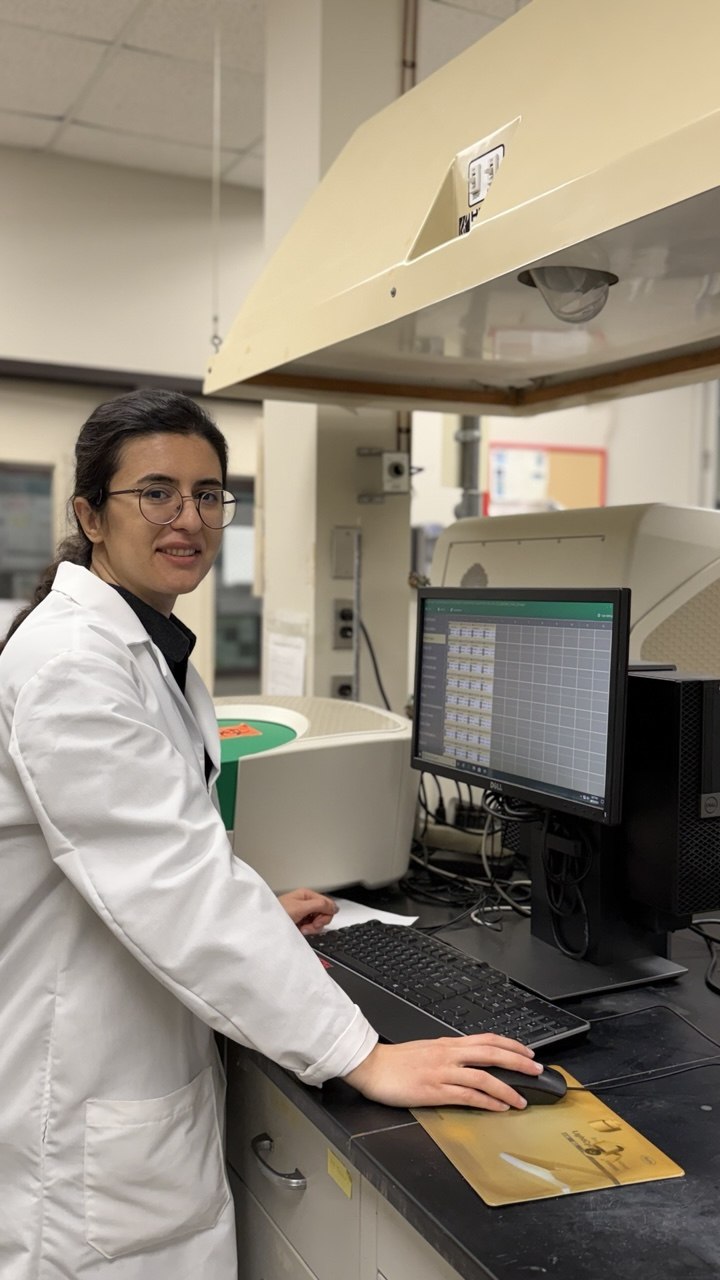
Dissertation research
Co-metabolic biodegradation of 1,4-dioxane
Investigating how propane, 1-propanol, and 2-propanol shape propanotrophic communities and their capacity to remove 1,4-dioxane.
- Enrichment cultures
- qPCR & metagenomics
- GC–MS / GC–FID
Environmental engineering · Michigan State University
I combine controlled experiments, chemical measurements, and molecular analysis to understand how microbial communities transform groundwater contaminants.
Environmental microbiology & bioremediation
My research combines enrichment cultures, molecular tools, and contaminant analysis to understand—and improve—co-metabolic biodegradation of persistent groundwater pollutants.
Dissertation research
Investigating how propane, 1-propanol, and 2-propanol shape propanotrophic communities and their capacity to remove 1,4-dioxane.
R·02
Microbial ecology
Identifying key organisms, propane monooxygenase genes, and community responses associated with contaminant transformation.
R·03
Applied remediation
Evaluating sustained aerobic degradation in systems with TCE, cis-DCE, and 1,1-DCE, and exploring the potential of enriched cultures for mixed-contaminant remediation.
R·04
Emerging collaboration · study in development
Developing a collaboration to test selected PFAS compounds with enrichment cultures. Analytical methods and experimental conditions are being finalized; transformation outcomes have not yet been established.
02 / Current directions
Cometabolic biodegradation and bioaugmentation of 1,4-dioxane and chlorinated solvents; functional genes, metagenomics and transcriptomics in environmental microbiology.
Developing experiments on microbial transformation of selected PFAS compounds. Analytical methods and study conditions are being finalized; results are forthcoming.
Hydrologic and water-quality modeling, uncertainty, contaminant fate and Great Lakes water-resource sustainability.
Sustained 1,4-dioxane cometabolism in cultures from diverse sources, comparing propane and alcohol growth substrates with metagenomic and transcriptomic insights. This work is in progress.
03 / Water systems
My background in water resources and hydrological modeling complements my experimental research. It includes contaminant-plume modeling and large-lake water-balance work using L2SWBM, including Lake Victoria research with Andrew Gronewold at the University of Michigan.